

Starting Conversations Is Awkward — That’s Normal
You walk into a room. You see people chatting. You stand by the snack table pretending to be busy.
We’ve all done it.
Starting conversations in networking sessions is awkward — especially if you're trying to break into a new field like Product Management.
You want to sound smart, but not rehearsed. Curious, but not desperate. And somehow in that mental juggling act, you end up saying nothing at all.
But here's the good news: it’s not just you. And better yet — there’s a way through it that doesn’t require being fake, loud, or overly polished.
Why Being Yourself Isn’t Enough
Everyone says, “Just be yourself.”
But here’s the problem: Most people don’t know what that means — especially in a room full of strangers where they feel like they have to impress, explain, or somehow “earn” the other person’s attention.
If you’ve ever stood around at an event trying to look busy so you don’t have to talk to anyone — or drafted and deleted the same LinkedIn message six times before sending it — you’re not alone.
I’ve been there too.
You freeze. You ramble. You overthink.
Eventually I realised the issue wasn’t that I was awkward. It was that I wasn’t clear. I didn’t know what story I wanted to tell. I didn’t know what I brought to the table. And if I didn’t know that — how could anyone else?
That’s when this clicked for me:
You can’t show up confidently if you haven’t done the work to know yourself first.
And once you get that right, conversations stop feeling like cold calls — and start becoming real, energising, and productive.
Self-Discovery is the First Step to Visibility
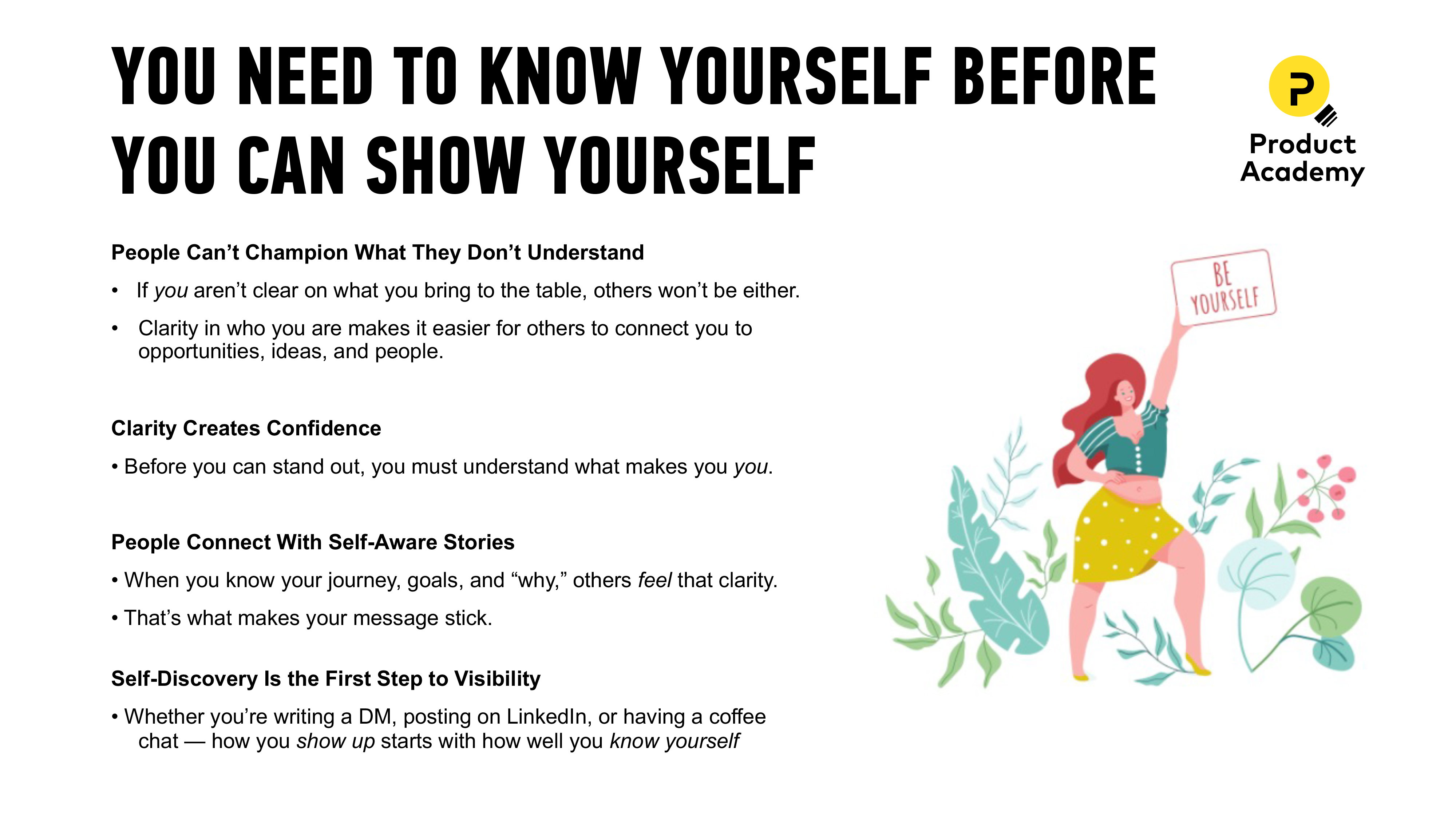
Networking isn’t about selling. It’s not about pretending to be confident. It’s about giving people a reason to connect with you — and a way to help you.
But they can’t do that if they don’t understand what you’re about.
So, here’s the core principle:
People can’t champion what they don’t understand.
You don’t need to have all the answers. You just need to be able to clearly explain:
- Who you are
- What you care about
- What you’re looking for
- Where you add value
The sharper you are on these things, the easier it becomes for others to see you, support you, and remember you when opportunities come up.
Clarity Creates Confidence
Here’s something no one tells you about networking:
It’s not about being impressive. It’s about being clear.
If you know your story and can say it simply, you come across as grounded and real. And people trust people who are grounded and real.
Start by filling out these prompts for yourself:
- What’s your professional background?
- What are your top 2–3 strengths or superpowers?
- What kind of roles are you exploring right now?
- What kind of support are you hoping for?
- What do people often come to you for help with?
- What are your blind spots?
Once you write this out, you can tailor it depending on who you’re talking to — but the base doesn’t change. And that consistency builds credibility.
Example: Being Yourself — But Clear
Let’s say you’re a Senior BA trying to break into Product.
Here’s a rough outline of what your self-story could look like:
- Who you are: “I’ve spent 10 years as a BA in tech, and now I’m shifting toward Product.”
- What you’re known for: “People say I simplify complexity, build trust fast, and keep teams unblocked.”
- What makes you interesting: “On weekends, I run a budget travel blog called The Weekend Traveller. I love making things efficient and useful.”
- What you offer: “I’ve led discovery and MVP delivery for fintech products. I’ve also got a software engineering background and strong design instincts.”
- What you need: “Right now, I’m looking to interview for Associate PM or PM roles — or even short-term projects where I can learn on the job.”
- Blind spots to own: “I tend to get excited about solutions too quickly — something I’m working on by slowing down in the discovery phase.”
That’s not a sales pitch. That’s a memorable profile.
It tells people what you’re about, where you’re headed, and how they might help — all in under a minute.
The 5-Finger Conversation Technique
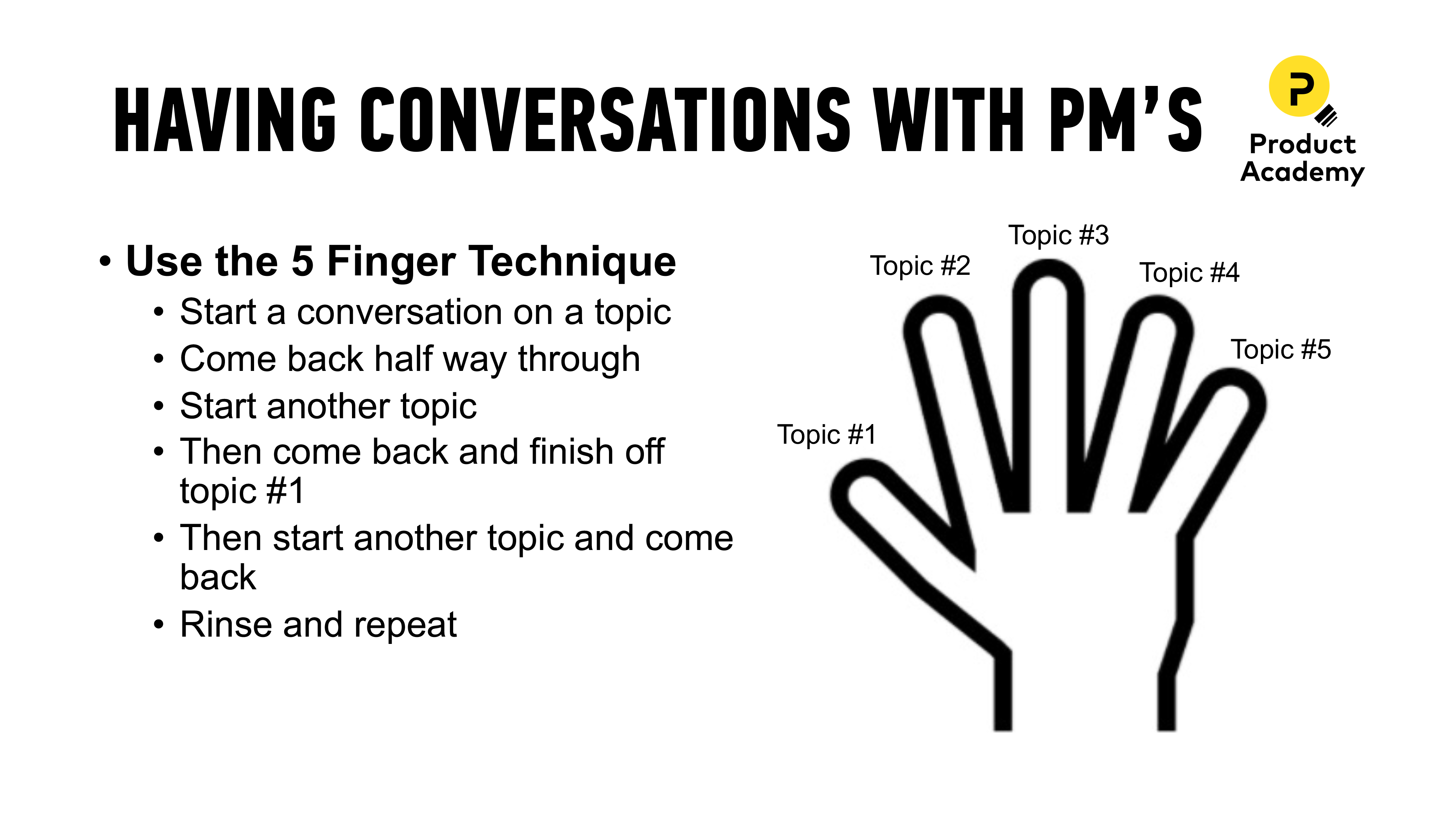
Once you’ve got your story clear, you need to get better at the conversation part.
And this is where most people overthink.
Here’s a simple, repeatable method you can use:
The 5-Finger Technique
- Start a topic
- Leave it half-finished
- Start another topic
- Return to the first one
- Keep alternating
Why it works:
- It mirrors natural conversations
- It creates flow and rhythm
- It prevents awkward silences or “interview vibes”
Example:
Start with: “How did you get into product? "Then pivot: “Have you read anything good lately about roadmapping?” Circle back: “So you mentioned earlier that your PM journey was a bit random — what happened there?”
You’re not grilling them. You’re chatting like a real human.
Make the Conversation About Them

When most people walk into a networking event or start a new conversation, the question running through their mind is: “What should I say?”
But the more powerful and strategic question to ask is: “How can I learn more about this person?”
Why? Because people love to talk about themselves — not in a self-centered way, but because sharing our stories helps us feel seen, understood, and connected. The most meaningful and memorable conversations aren’t the ones where you impress someone — they’re the ones where you make the other person feel interesting, valued, and heard.
If you shift the focus from talking to curiosity, everything changes. Your energy shifts, your anxiety decreases, and your relationships deepen faster.
Here are some conversation cues that open doors to connection:
- What motivates them? Ask what gets them out of bed in the morning. What are they working on right now that excites them?
- What’s important to them? This could relate to work, family, legacy, or personal values. You’ll quickly uncover what matters most in their world.
- What energizes them? What lights them up when they talk about it? Pay attention to tone, body language, and spark.
- What do they love talking about? Hobbies, passions, side projects — ask about things they’d talk about even if no one paid them to.
- What shuts them down or causes discomfort? Being attuned to what makes someone withdraw is just as important. Respect their emotional boundaries and avoid pushing into topics that close them off.
And here’s the secret: The more curious you are, the more magnetic and memorable you become. People might forget what you said — but they’ll never forget how you made them feel.
So next time you're in a conversation, worry less about crafting the perfect response. Instead, lean into curiosity. Ask open-ended questions. Listen deeply. Notice what matters to them. That’s how meaningful, authentic relationships begin — and how true influence is built.
Conversation Starters for PMs
Ice Breakers
Start with simple, genuine curiosity. These questions help break the ice while giving insight into someone’s journey and preferences in the product world.
- How did they get into their current PM role?
- How does PM work in their current company?
- What are some books you should read about?
- What are some events you should be going to?
- What is a good ‘product company’ and why?What is their favourite product?
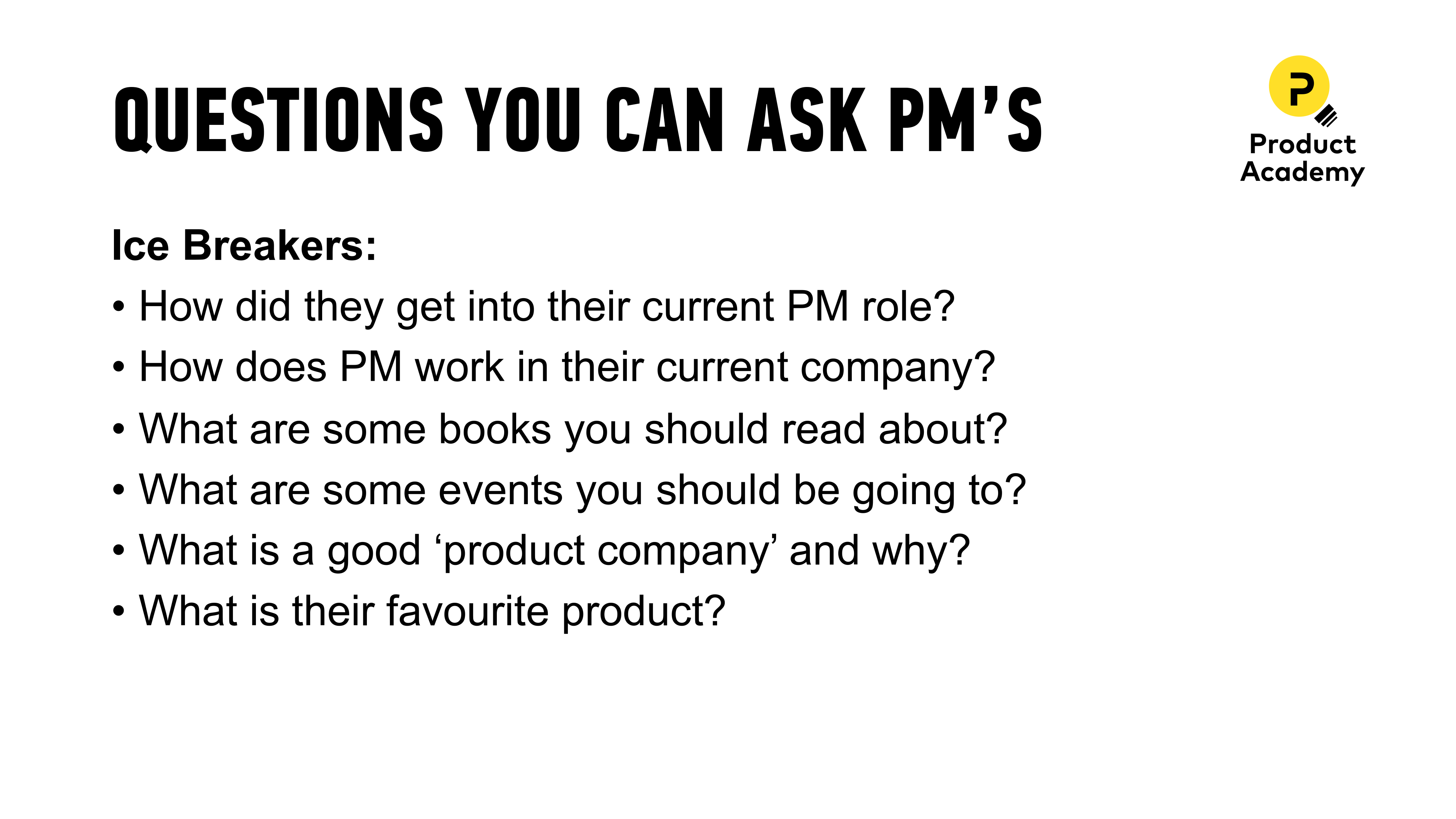
These questions not only help you learn more about their path but also set the stage for deeper conversation.
The PM Role
Once you’ve warmed up the conversation, dig into how they actually do the work. This is where you can uncover the nuances of the role and learn how they navigate real-world challenges.
- How do they work with Project Managers, Product Owners, UX, BA, etc.?
- Any tips on how to deal with tough stakeholders?
- Do they use agile or waterfall or a mix of methodologies in their company?
- What are some tips to get people to follow your product vision?
- How do they share product learnings at their company?
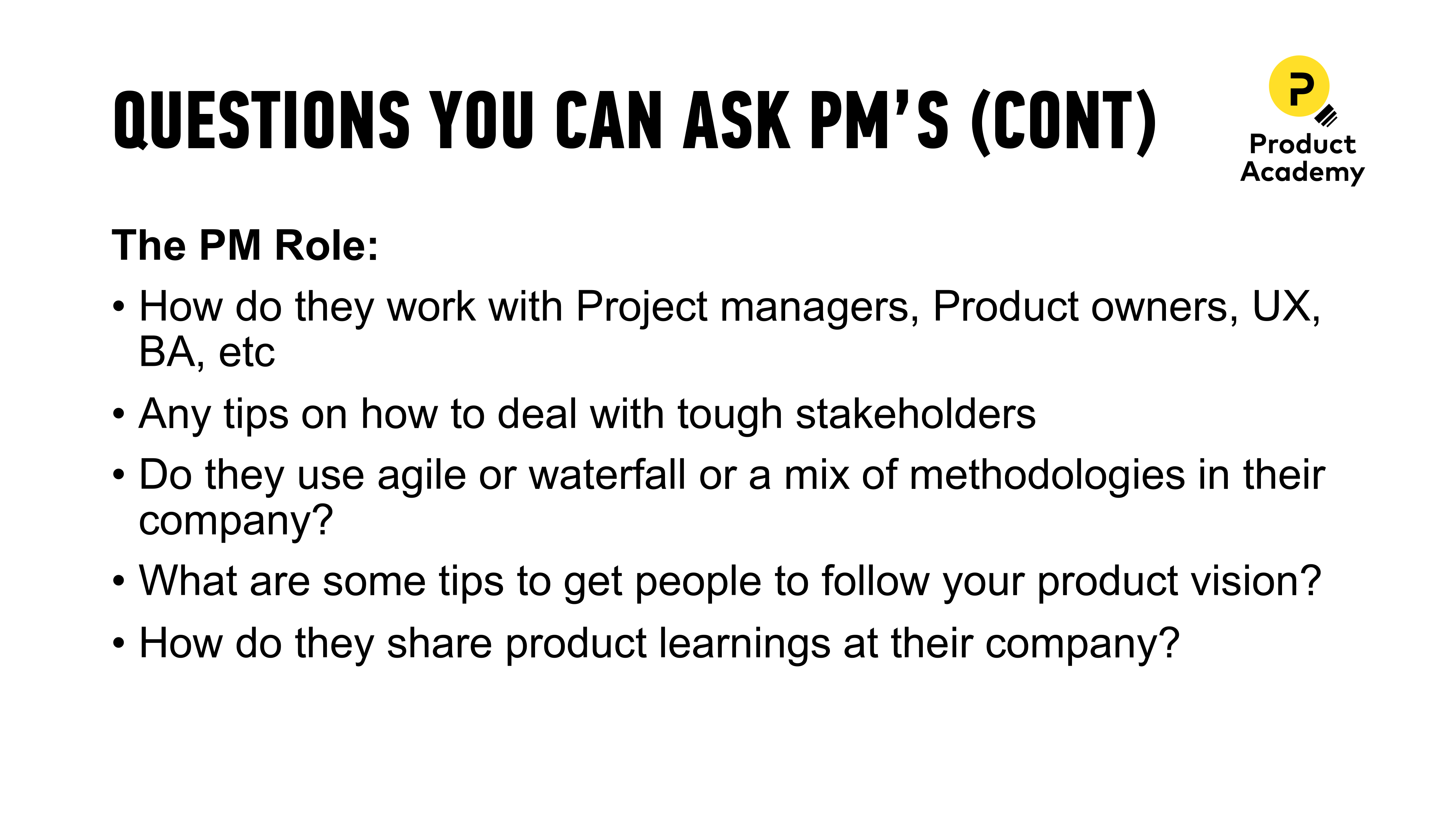
These will give you insight into their process, their leadership style, and the collaborative dynamics that make a product team successful.
Technical Questions & Strategy
Now that you’ve got a feel for their environment, explore the tools and strategic thinking behind their work. This helps you stay ahead and adapt to the evolving PM landscape.
- What do they think of roadmaps?
- How do they use roadmaps at work?
- What is a really good PM tool they’ve used recently? Why is it good? or not good?
- Where do you think the future of PM will be?
- What makes or breaks Product teams?
- What are some tips on building a strong product culture?
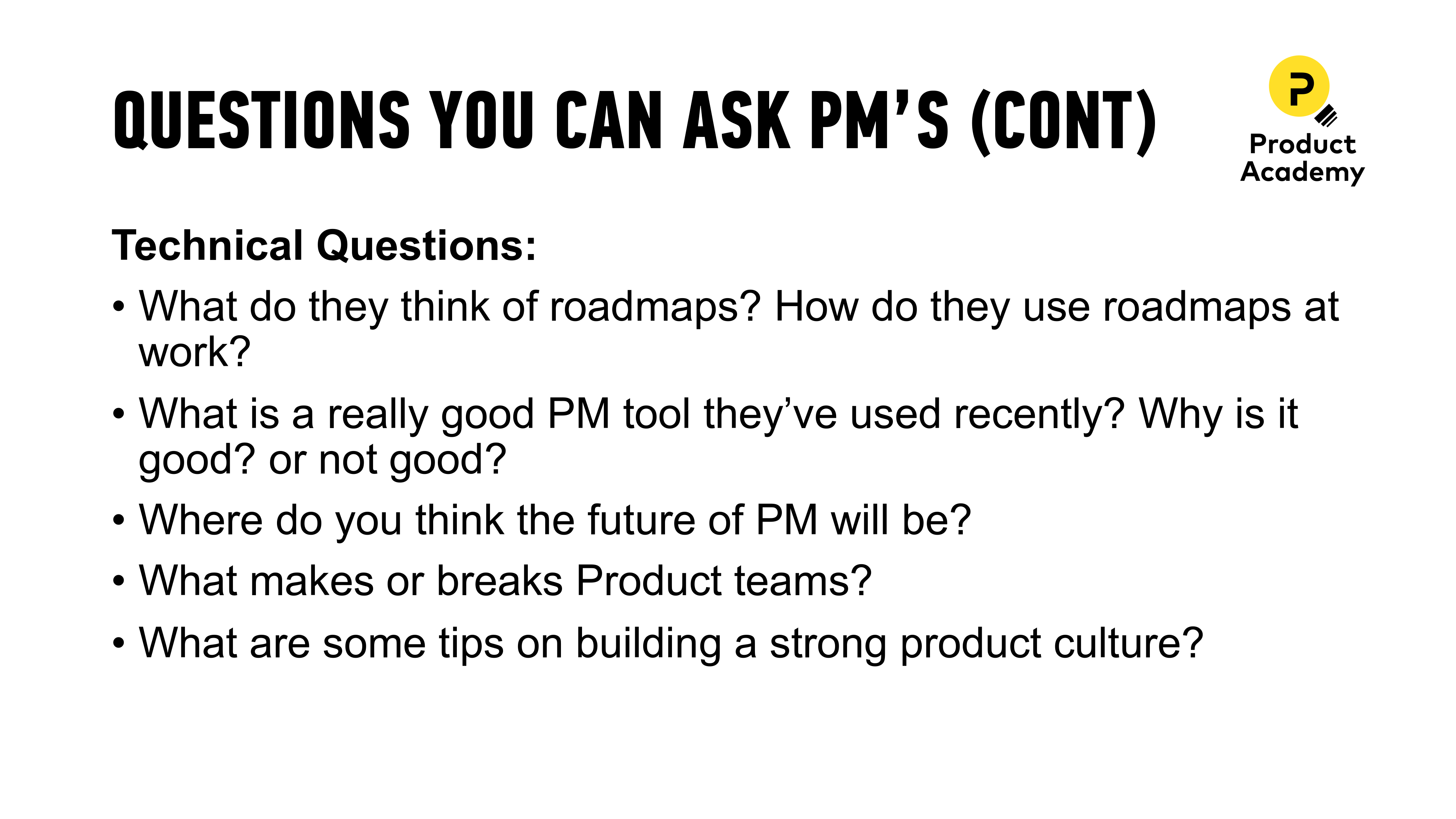
These questions spark thoughtful dialogue and may even reveal tips or tools you can apply immediately.
Wrapping Up
As the conversation winds down, let them know your intentions and how they can support you. Be respectful, authentic, and open to feedback.
- Tell them you’re in the market for PM jobs
- What are some areas you should start with PM roles?
- Are they open to give feedback on your resume? or job descriptions?
- What are some of the best ways to keep in touch?
- What are some books you should read about?
- What are some events you should be going to?
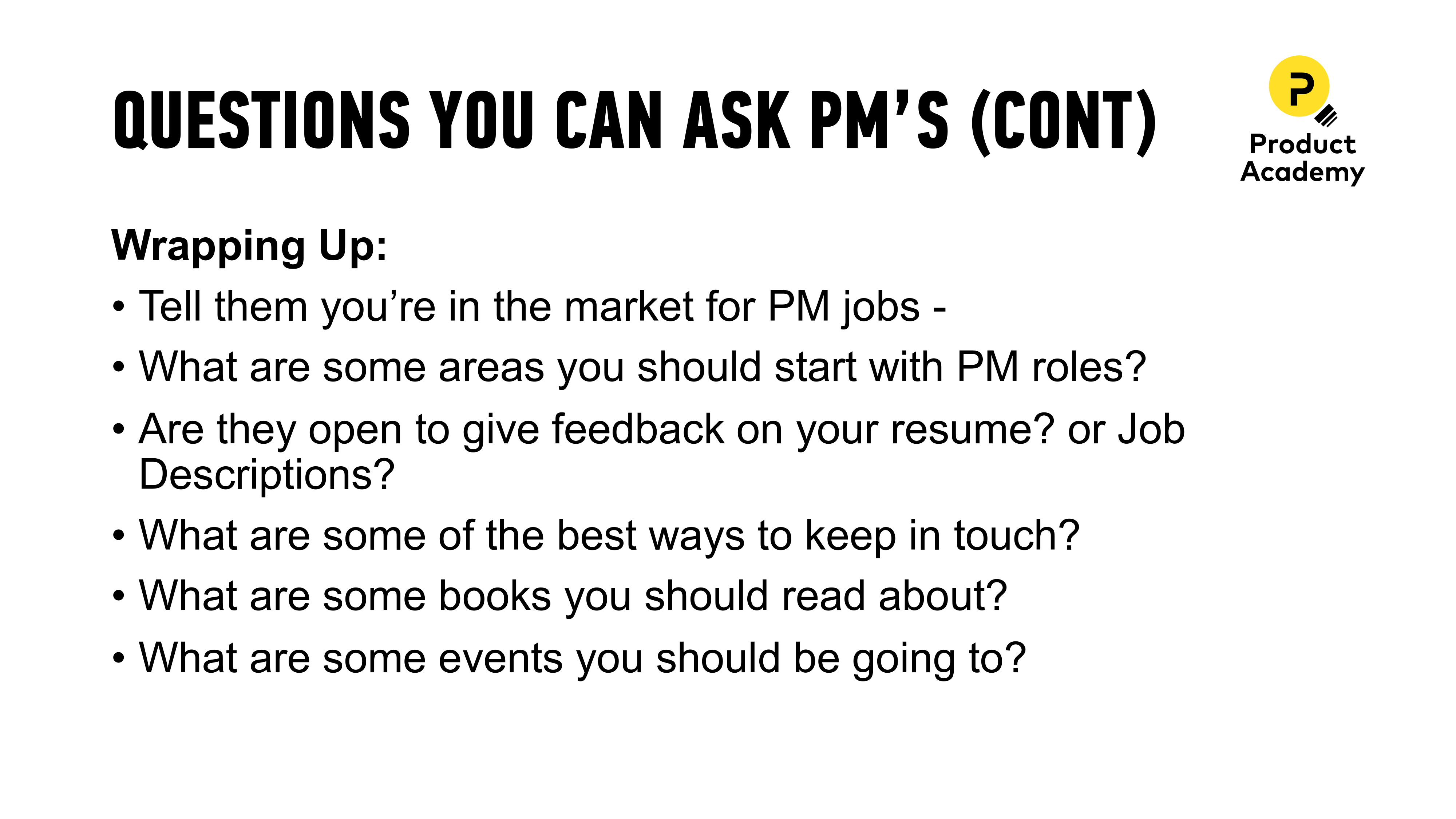
End with gratitude, and if the vibe is right, suggest a follow-up — you never know where one good conversation might lead.
Networking = Being Helpful (Not Salesy)
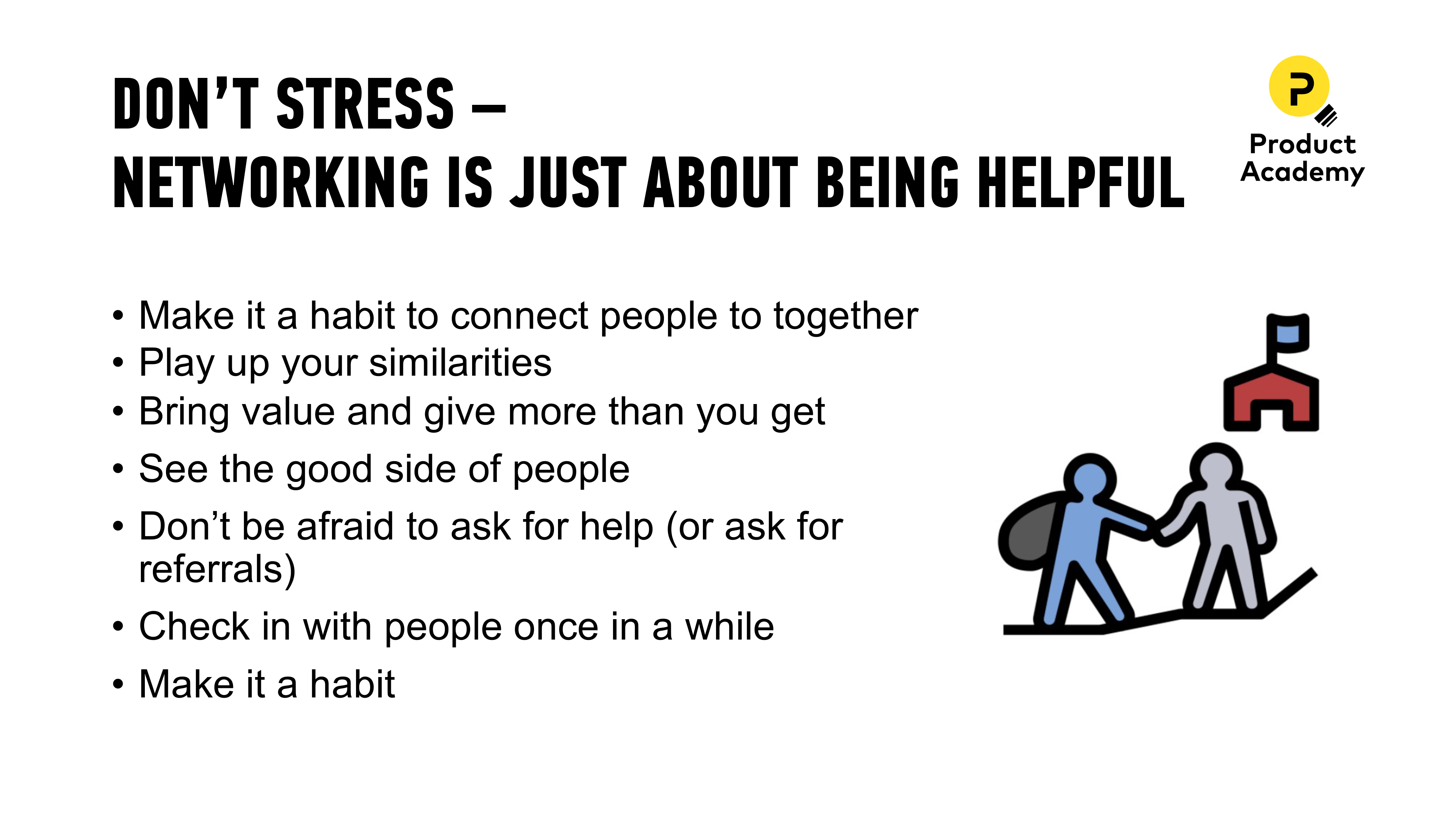
You don’t need to “pitch.” You need to connect.
Here’s how you become the kind of person people want to help:
- Share helpful resources (articles, tools, events)
- Introduce people with similar interests
- Follow up thoughtfully — even weeks later
- Congratulate them on milestones
- Comment on their posts with real insight
You’re not trying to get something from them — you’re building something with them.
And that changes everything.
Final Thought: Know Yourself Before You Show Yourself
If you only remember one thing from this post, let it be this:
Clarity beats charisma. Self-awareness beats self-promotion. Being helpful beats being impressive.
So the next time you’re at a meetup, a coffee chat, or writing that DM — don’t focus on saying the perfect thing.
Focus on showing up as someone who knows themselves, cares about the craft, and wants to contribute.
Because the more people understand you, the more they can support you.
👋 Hey, If you're struggling to break into product management - get my FREE Blueprint for mid-career professionals become PMs here:
https://www.productacademy.io/How-To-Break-Into-Product-Management
I’ve created this to help you break into PM without quitting your day job!




Responses