Let me get real for a second.
Networking is the part of breaking into PM that nobody wants to admit they’re bad at. I include myself in that. (I’ve been doing this for 20 years and I still feel a little awkward every time I send a “love to connect” DM to someone I haven’t actually met.)
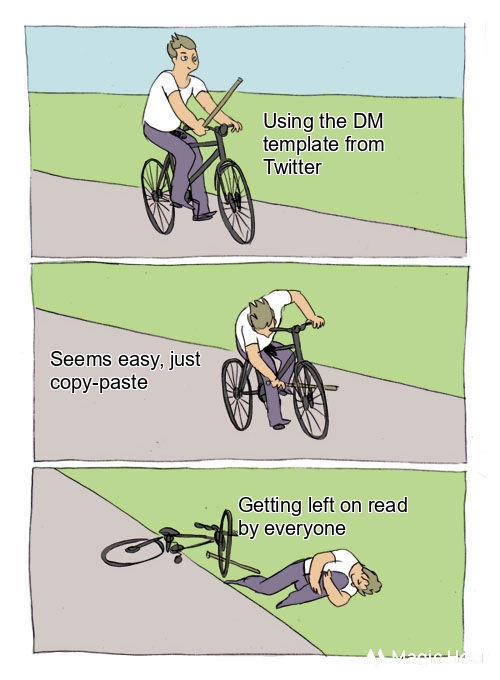
So I want to start with the punchiest version of the lesson I learned the hard way: the cold-DM industry has lied to you.
“Send 50 personalised messages a week.” “Use this template that got me five referrals in a month.” “Just be authentic and reach out to 200 PMs.”
None of it works the way the LinkedIn coaches say it does. Because it skips the only step that actually matters. Referrals are not transactions you optimise in a week. They are relationships you build over a year.
The PMs who break in cleanly didn’t crack a magic outreach formula. They started planting in March so they could harvest in October.
That’s the system the hustle-culture content will never sell you, because it cannot be packaged as a 30-day product.
In this post, I’ll walk you through the exact six-month playbook I use inside Product Academy. It’s the same one I used to land my first PM role in the US, and the same one I’m running right now as I look for my next one.
Here’s what we’ll cover:
-
Why does the cold-DM playbook work for the coaches selling it, but not for the rest of us?
-
What do I do in Month 1 if I don’t know any product managers yet?
-
How do I help people when I’m the one who needs the help?
-
How do I track this without becoming the person nobody wants to hear from?
-
When does this thing actually start paying back?
Hopefully this post answers some of those for you. Let me show you what I mean.
Why “Network Harder” Advice Doesn’t Work
The cold-DM industry has a favourite number. Around 80% of product roles come through referrals. [CITATION NEEDED.] That number is true. The advice that follows it is what’s broken.
The advice goes: most jobs come through referrals, so you need to network. Networking means sending DMs. Send more DMs, and you’ll get more referrals. The math sounds right. It’s missing the most important variable: time.
Here’s what’s actually going on. A hiring manager doesn’t refer someone they have just met. They refer someone they trust.
As Simon Sinek puts it: “Trust takes years to build, seconds to break, and forever to repair.”
The PMs who actually break in cleanly are running a different game on a different clock. They plant for a year. They harvest in the second.
So here is the system. Six months of work. One action per week. A referral engine that runs for the rest of your career.
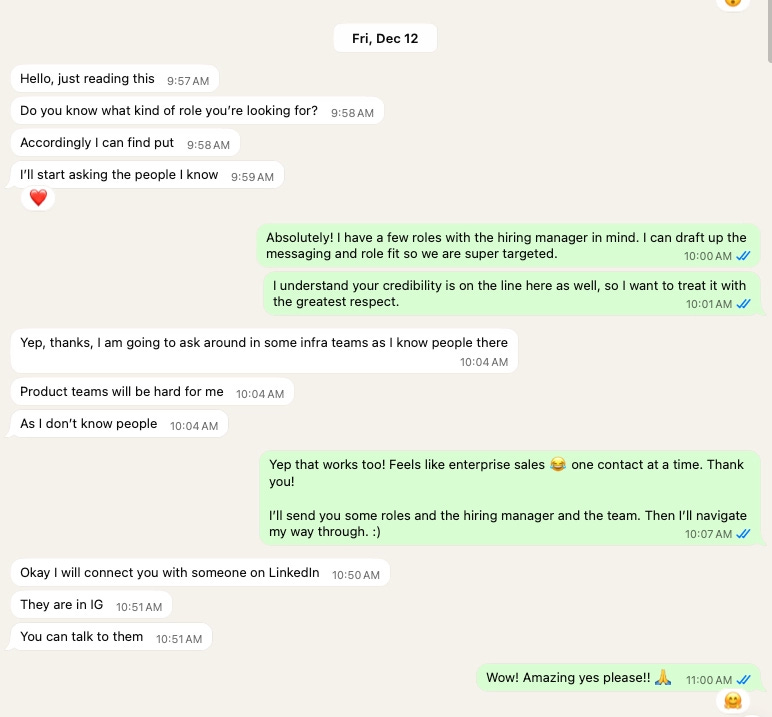
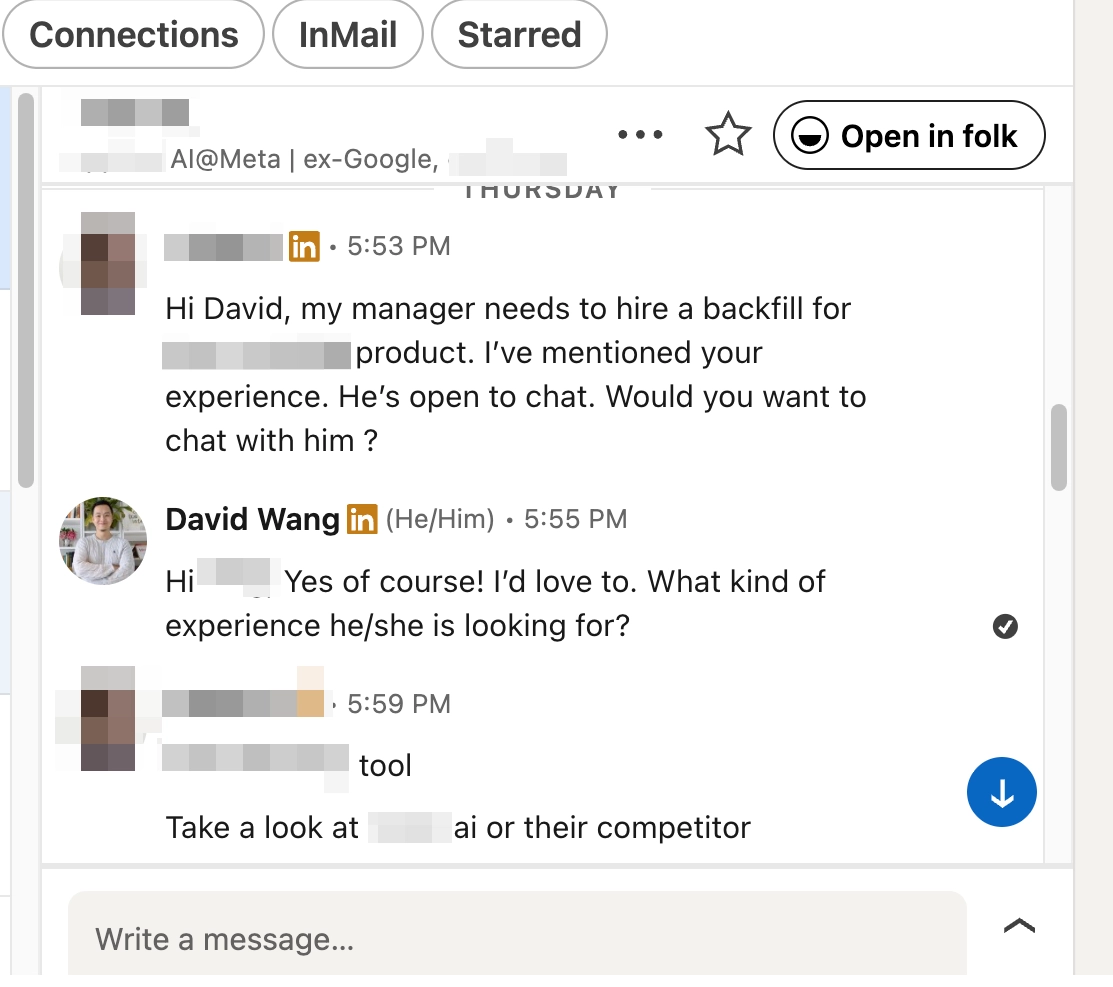
Here is my actual conversation with someone I’ve been talking to for over a year for a referral into a team in Big Tech:
Step 1. Month 1: Build the Target List
Before you message a single human, you need a list.
Most aspiring PMs skip this step because it feels like procrastination. (It isn’t. I lost six months early on by “networking” without a target. Don’t be me.) The reason most of your DMs don’t get a reply isn’t your message. It’s because you sent it to the wrong person.
Here’s the build:
-
20 companies. Not 200. Not 5. Twenty. Companies you would actually accept an offer from in the next 18 months. A mix of stretch and realism.
-
3 PMs at each company. Active practitioners. Posting in the last 30 days. Bonus points if they overlap with your background or stage.
-
One spreadsheet. Five columns: Name, Company, Team, Last Public Post, Mutual Connection.
That’s a 60-row list. It takes one Saturday morning to build. Once it exists, every other step in this playbook has somewhere to land.
(I’ve watched people spend weeks “researching companies” without ever writing them down. Don’t. The list is the unlock.)
💡 Free Download: (Subscribe to grab the FREE Networking Tracker)
Step 2. Month 2: Engage in Public
This is the month where you stop being a stranger.
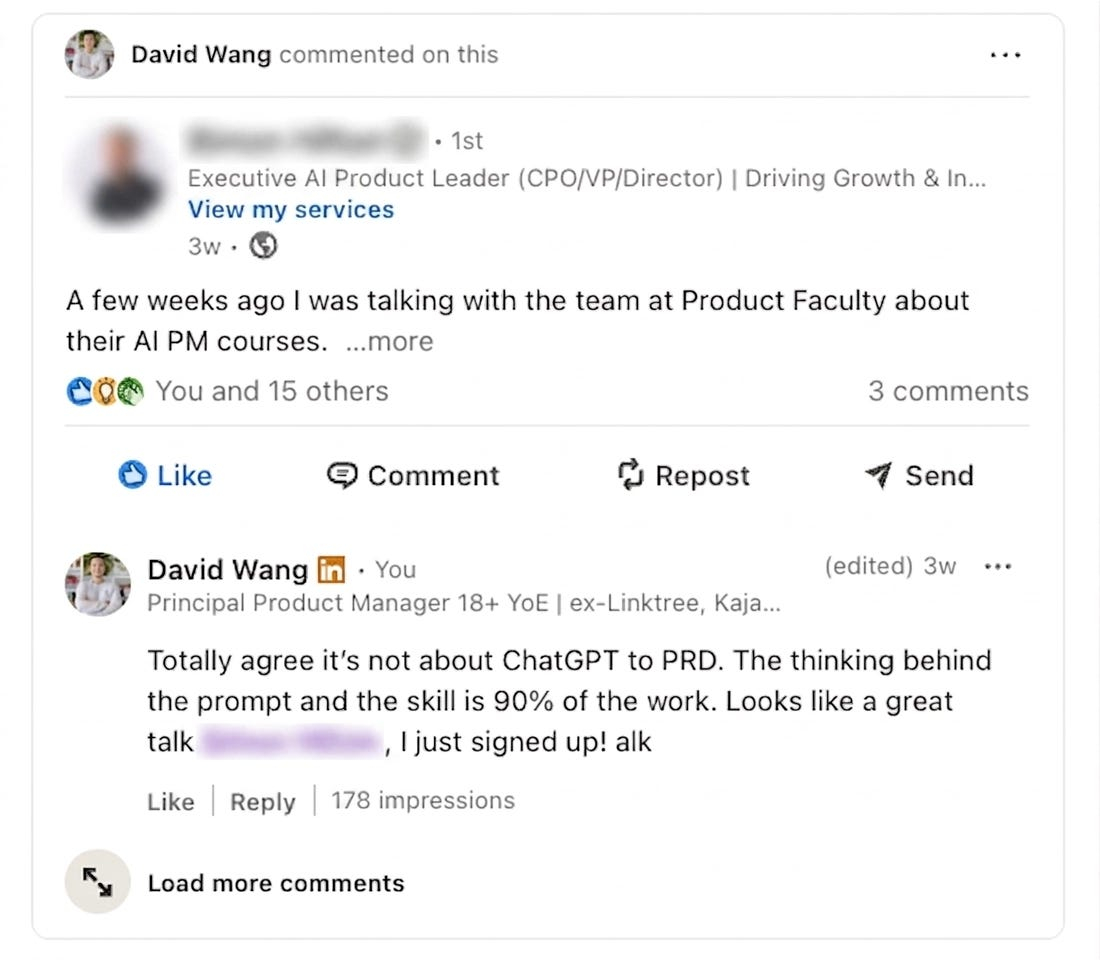
One substantive comment per week on each of your top 10 PMs’ content. “Substantive“ is the key word. “Great post” is invisible. (Honestly, it’s worse than invisible. It tells the PM you have nothing to say.)
A substantive comment looks more like this: “Your point about treating recruiters as peers reminded me of an interview I sat through last year, where the recruiter became my biggest advocate. Curious if you’d flip the same play for hiring managers too.”
That comment doesn’t sell anything. It just shows you read the post and have a brain. The PM you commented on will look at your profile. So will the next ten people who scroll past.
The math:
-
10 PMs.
-
4 comments per PM over the month.
-
40 thoughtful comments.
Forty comments are enough for a PM to recognise your name when you message them in Month 4. You are not selling yourself yet. You are becoming non-stranger. (My favourite Pokemon evolution: stranger → non-stranger → friend → referrer.)
Block 30 minutes on Sunday night. Comment. Close LinkedIn. Repeat.
Step 3. Month 3: Start Helping
This is the step where most people quit. (Helping someone else when you’re the one who needs help feels backwards. The first time I ran a free mock interview while still unemployed, I genuinely thought I was wasting my own time. I was wrong.)
Do it anyway.
The rule is simple: one specific gift per week. No ask attached.
What counts as a gift:
-
A teardown of someone’s product or portfolio.
-
A 45-minute mock interview with an aspiring PM.
-
An intro between two people in your network who should know each other.
-
A piece of feedback on a resume someone posted publicly.
-
A useful resource forwarded to someone who would actually care.
This is the core of The Break-In Blueprint, the methodology I now teach to every Builder inside Product Academy.
The cadence is Give. Give. Get. Three gives before any one get. (Yes, it sounds slow. It is. That’s why it works.)
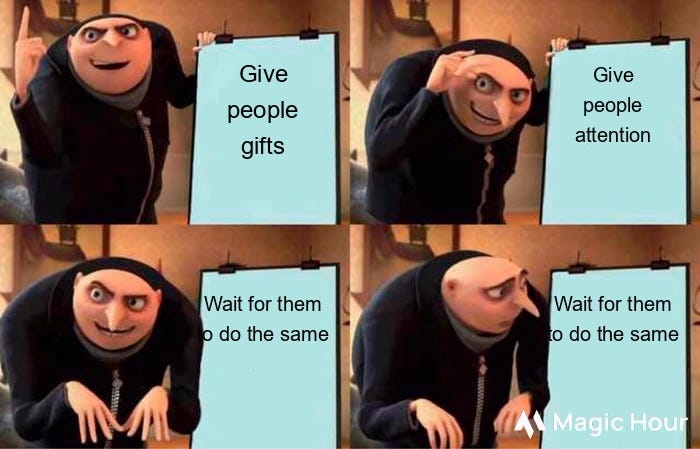
The reason this works is mechanical. People remember the person who helped them when there was nothing in it for them. They remember you in the quarter you didn’t think they would.
Step 4. Month 4: Open the Asks
Now you can ask. Not before.
(Most aspiring PMs ask in week one. That’s the mistake.)
By now, you have a list. You’ve been visible for two months. You’ve helped four people. You have artifacts of your own work (teardowns, mocks, feedback) that prove you’re a PM in action, not a PM in title. That’s a different kind of person sending the DM.
The asks happen at a rate of one per week. Specific. Short. Backed by an artifact.
Here’s the template I use:
Hi [Name], I’ve been following your work on [specific project / post].
I put together a short [Artifact] on [their product / their post] and wanted to send it across. [Link] I thought you might find a couple of the framings useful.
That message converts 5 to 10 times higher than the standard cold DM.
Why? You earned the right to send it. Two months of being visible. One artifact attached. No ask is buried in the second paragraph.
Four asks in Month 4. Track who replies. Track who doesn’t. Don’t re-engage the silent ones for at least 90 days. (The fastest way to look desperate is to follow up twice in a week.)
(Subscribe to grab the FREE Template [10 outreach messages, ranked by intent: comment, gift, ask, check-in])
Step 5. Month 5: Maintain the Warmth
Here’s the part most aspiring PMs miss. They assume the relationship is built once the first conversation happens.
It isn’t. The relationship is built in the messages they don’t expect.
In Month 5, you become the person who sends one useful thing per week to one past helper, with no ask attached. An article they’d care about. A job opening on a friend’s team. A heads-up on a layoff at a company they’d want to recruit from. (Senior PMs love being first to know.)
Twelve light-touch messages over the month. Total time: about 90 minutes.
Most aspiring PMs find this step the hardest because it has no immediate ROI. That is exactly why it works.
The senior PMs who refer the most people are also the ones who receive the most “saw this and thought of you” messages.
The cause and effect run in both directions, and most people never figure it out.
Step 6. Month 6 and Beyond: Compound
This is the month the numbers stop being theoretical.
The people you helped in Month 3 are starting to land roles. Some remember you.
The PMs whose posts you commented on for two months see your asks land differently than the cold DMs in their inbox. The recruiter you sent a blurb to has forwarded you to another hiring manager you’ve never even heard of.
The first referral usually arrives between Month 8 and Month 14, depending on how many people you helped and how much the market is moving. By Month 18, multiple referrals per quarter are normal.
By Month 24, you stop applying directly to most roles. Every interview you take comes through someone who has already vouched for you.
(That’s the moment your job search changes shape. You stop chasing. People start chasing you.)
6 months of work. 12 months of compounding. This is an example of someone I met 6 months ago during an interview practice.
I helped them land a role at Meta, and 6 months later, when an opening came up, I connected them with their hiring manager.
If you're seeing this, subscribe to my newsletter. I share behind-the-scenes stuff and things I can't post publicly, sent straight to your inbox.